Carbonization plants release gas, char fines and condensable vapours that many operators treat as waste, and you, as an industrial company manager or as a project investor, convert those streams into revenue when the process captures them properly. The syngas utilization system process routes the combustible gas back to the reactor or to a boiler, and that internal loop lowers the fuel purchase of the plant. The same process collects char fines for briquetting, and the fines then enter the market as a saleable product instead of leaving the site as waste.
Which residue streams does the process capture and sell?
The reactor produces combustible gas, tar rich vapour, char fines and hot flue gas, and each stream carries a different value. The gas returns to the burner and replaces part of the external fuel, and that substitution appears as a cost reduction in the monthly accounts. The char fines feed a briquetting section, and the briquettes serve household fuel buyers or agricultural soil applications. Hot flue gas preheats drying air for the feedstock, and that recovery reduces the moisture load that the process must remove.
Which equipment makes the valorization path reliable?
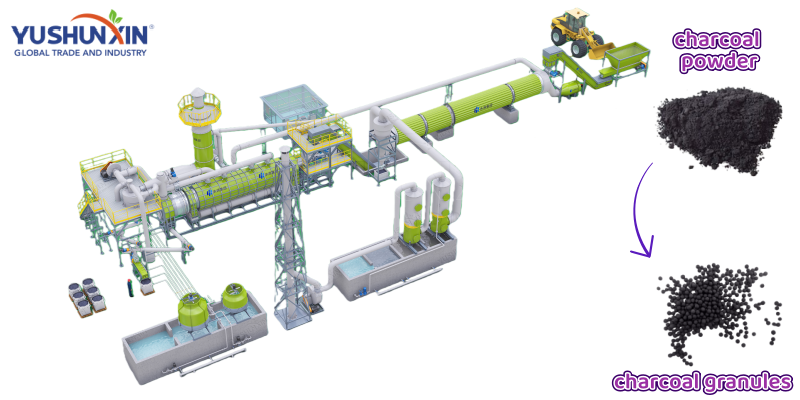
A cyclone, a scrubber, a tar separator, a gas buffer tank, a briquetting press and a screening unit form the equipment chain that turns residues into products. Processing equipment with a buffer tank absorbs the fluctuation of the gas flow, and that buffer keeps the burner stable when the feed rate changes. The biochar production solution for residue valorization combines carbonization with carbon removal documentation, and that combination opens a second revenue line for the plant. Treatment machinery with sealed transfer points protects the working environment while the plant handles fine carbon.
How do you quantify the additional revenue?
Your engineers weigh the gas that the burner consumes each day and convert that volume into the fuel cost that the plant avoids. The same team records the char fines that the screening section produces and multiplies that tonnage by the local briquette price. A carbonization syngas residue valorization model also includes the carbon removal value when the national framework recognises biochar as a durable storage pathway. The combined figure shows the payback of the recovery equipment, and that figure supports the internal approval of the investment.
How do you scale the revenue stream across sites?
A standard module with the same reactor, the same gas train and the same briquetting section allows your company to duplicate the plant at a second site without redesign. Your project office keeps one process data set, and that data set shortens the commissioning of every following installation. The syngas process residue revenue planning file records the local energy price, the local briquette price and the available feedstock for each location. That record lets your management compare sites on one economic basis.
Conclusion for industrial companies and project investors
Residue valorization turns a carbonization plant into a multi product operation, and that operation earns more from the same feedstock. A syngas utilization equipment supplier that supplies the gas train, the briquetting section and the control logic as one package removes the interface risk of the upgrade. Pyrolysis oil and combustible gas both carry chemical energy that the plant captures and reuses, and that energy improves the margin of every delivered tonne. If your team needs a reference for the residue streams and the equipment list, you can learn more about https://www.ysxcharpro.com/how-does-the-continuous-carbonization-furnaces-work/ before the next engineering review.