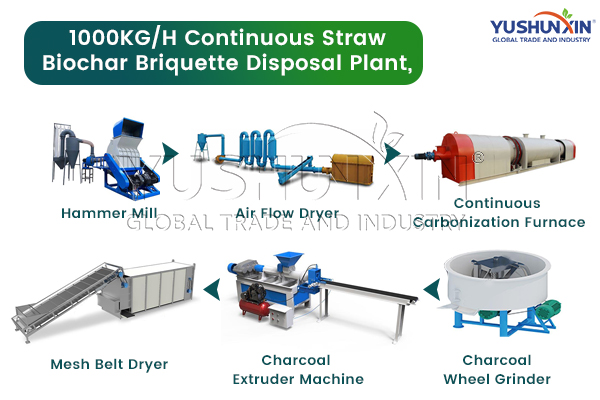
Public bodies that manage agricultural residue and green waste need a disposal route that costs less than hauling material to distant landfills. A continuous carbonization furnace investment plan shows the capital requirement, the operating budget and the revenue that charcoal or biochar generates for the authority. You, as a municipal project owner or as a development bank analyst, compare several financing structures before you commit public funds. The continuous carbonization furnace investment plan therefore becomes the central document of the feasibility study, and that document supports the approval process at every level.
Which financing models fit a public continuous carbonization project?
A municipal budget line works for small capacity, because the authority owns the plant, the land and the feedstock supply. A public private partnership transfers operation to a private partner and keeps the asset under public ownership, and that model suits medium capacity projects. A lease structure lets a cooperative pay a fixed monthly fee while the lessor retains the equipment title. A green bond or a climate fund grant covers part of the capital cost when the project documents carbon removal and local employment outcomes.
Which carbonization equipment items belong in the financing package?
The financing package includes the dryer, the continuous carbonization furnace, the gas cleaning train, the heat recovery loop, the cooling conveyor, the briquetting section and the control system. Each item appears with a delivery schedule, and that schedule defines the drawdown plan of the loan. A continuous carbonization furnace working process description helps the lender understand why the equipment list matches the contracted output. Processing equipment with documented energy balance also supports the operating cost forecast that the credit committee reviews.
How does carbon credit revenue change the repayment schedule?
Biochar stores carbon in a stable form, and certified removal units create revenue that a public project can pledge against debt. The timing of that revenue differs from the timing of the loan instalments, so your finance team builds a bridging facility into the structure. Registration costs and verification fees reduce the net revenue during the first two years, and the model accounts for those charges. The carbon credit market rewards projects with rigorous monitoring, and that monitoring record raises the value of future issuance.
How do you prepare documentation for public carbonization project lenders?
Lenders require a feasibility study, an environmental assessment, a feedstock supply agreement and a technical specification for the plant. A public carbonization project financing model also contains a sensitivity analysis for feedstock price, charcoal price and utilization rate. A carbonization line equipment investment annex lists quotations, performance guarantees and warranty terms, and that annex gives the lender confidence in the capital number. Your project office then maintains one consistent dataset, because inconsistent figures delay credit approval more than any technical issue.
Conclusion for public authorities and development financiers
A well structured financing package matches the technology choice with the ability of the authority to operate and maintain the plant. A biomass carbonization plant manufacturer that provides training, spare parts planning and performance test data lowers the operating risk that lenders price into the interest rate. The carbonization route also delivers measurable landfill diversion, and that diversion satisfies the environmental targets that public projects must report. If your project office needs a starting document for the credit file, you can learn more about https://www.ysxcharpro.com/whats-the-price-for-a-continuous-carbonization-furnace/ before the next board meeting.