1) Collecting and Preparing the Straw
The process begins with sourcing clean, dry straw from farms or processing sites. Wheat straw, rice straw, and corn stalk residues can all work, but consistency matters: different straws have different ash content and burn characteristics. Before any conversion happens, the material is sorted to remove stones, plastic twine, and other contaminants that can damage equipment or increase ash in the final briquette. Next, the straw is chopped or shredded into a uniform size so it feeds evenly into carbonization equipment and later mixes well with binder. Moisture control is also critical; overly wet straw wastes energy during heating and can lead to smoky, incomplete carbonization. Many producers sun-dry the straw or use a low-temperature dryer to bring moisture down to a workable level.
2) Carbonization (Turning Straw into Char)
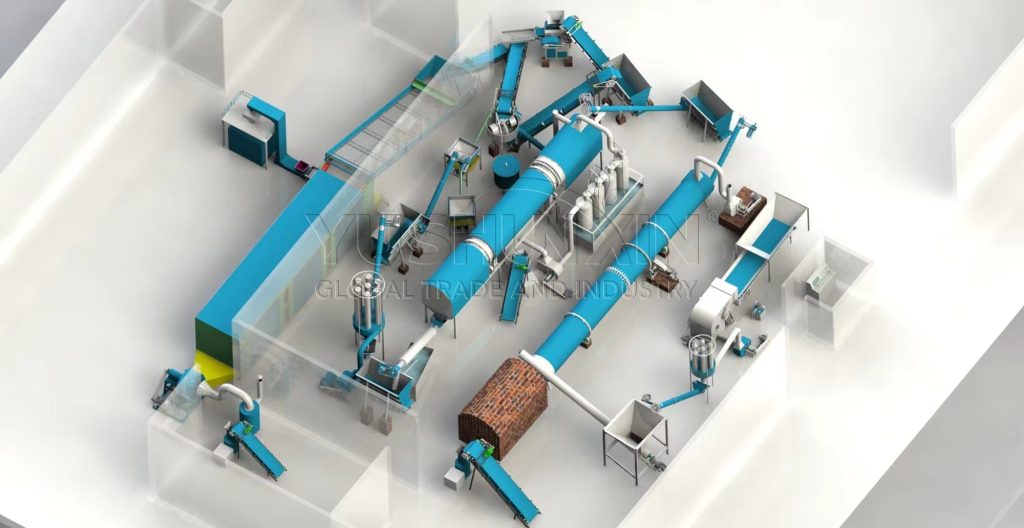
Carbonization is the step where straw is heated in a low-oxygen environment so it doesn’t burn to ash but instead breaks down into charcoal (biochar), gases, and vapors. This is commonly done in a kiln, retort, or continuous carbonization furnace. As temperature rises, the straw first dries, then begins to decompose; volatile compounds are driven off, leaving a carbon-rich solid. Good carbonization aims for stable, evenly carbonized char with minimal unburned fibers. Many modern systems capture and combust the released gases to help heat the process, reducing fuel consumption and visible smoke. When carbonization is complete, the char must be cooled without exposure to too much air, because hot char can reignite. Controlled cooling—often in sealed containers or cooling chambers—protects both product quality and worker safety.
3) Crushing, Screening, and Mixing with Binder
Once cooled, the straw char is crushed into a consistent powder or small granules. Screening removes oversized pieces and dust fines, improving briquette strength and burn uniformity. The char is then mixed with a binder and water to create a moldable blend. Common binders include starch (cassava, corn, or potato), molasses, or other plant-based gums; the best choice depends on availability, cost, and the target market. The binder percentage is carefully controlled: too little causes weak briquettes that crumble, while too much can increase smoke and reduce calorific value.
4) Briquetting, Drying, and Packaging
The mixed material is pressed in a briquette machine—often screw extrusion or stamping—into shapes such as pillows, cylinders, or hexagonal sticks. Compression improves density, making briquettes burn longer and transport more efficiently. Fresh briquettes still contain moisture, so they are dried (sun drying or a drying oven) until they reach stable moisture content for storage. Finally, briquettes are cooled, checked for hardness and breakage, and packaged in bags or cartons. Consistent drying and clean packaging are what turn a basic biomass product into a reliable, saleable fuel. Visiting: https://www.char-molder.com/product/straw-charcoal-briquette-plant/
Leave a Reply