Raw Material Preparation and Drying
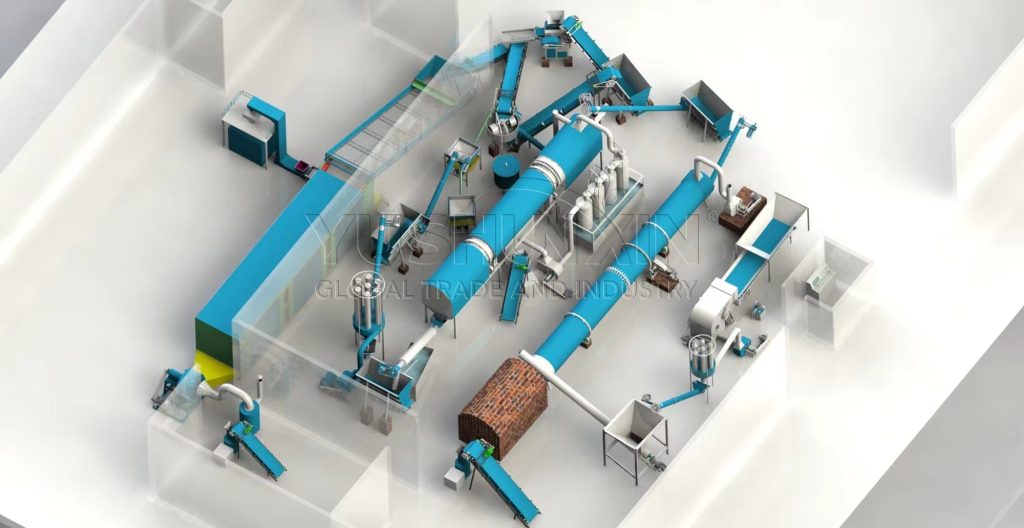
Charcoal briquette production begins with consistent, clean feedstock. The first machines you typically need are a crusher or hammer mill to reduce charcoal lumps into smaller particles, followed by a screening machine (vibrating screen or rotary sieve) to control particle size and remove oversized pieces. Because moisture strongly affects briquette strength and ignition performance, many lines include a dryer—often a rotary drum dryer or belt dryer—especially if the charcoal is produced on-site and stored in humid conditions. A simple feeding system such as a hopper with a screw conveyor helps deliver material at a steady rate, which is critical for stable pressing later in the process.
Mixing and Binder Preparation
After sizing, charcoal powder must be blended with binder and water to achieve the right plasticity for forming. A dedicated binder preparation tank or cooking pot is common when using starch or other soluble binders, allowing the binder to be dissolved uniformly before mixing. The core machine here is a mixer—often a double-shaft paddle mixer, ribbon blender, or wheel (pan) mixer—designed to coat the charcoal particles evenly. Consistent mixing reduces cracking and improves density, so many producers also add a metering pump or dosing system to control binder and water addition precisely rather than relying on manual estimation.
Briquetting/Pressing Machines (Forming Stage)
The forming machine is the heart of the line. The most common options are a roller press briquette machine (good for pillow, oval, or saddle shapes), a screw extruder briquette machine (often used for hexagonal or cylindrical briquettes with a center hole), or a hydraulic press (used when very high density or specific shapes are needed). Your choice depends on product type—BBQ briquettes, shisha/hookah briquettes, or industrial fuel—because each market expects different density, burn time, and appearance. A well-matched feeder (screw feeder or forced feeder) is usually paired with the press to prevent bridging and keep output consistent.
Post-Press Drying, Cooling, and Handling
Fresh briquettes often contain added moisture from binder and must be dried to prevent mold and to improve storage life. Common equipment includes a drying oven, tunnel dryer, or continuous belt dryer. Once dried, a cooling conveyor or cooling rack system reduces temperature before packaging, minimizing breakage and condensation in bags. For efficient logistics, many factories install a briquette screening line to remove fines and broken pieces, recycling them back into the mixer.
Packaging, Dust Control, and Utilities
Finally, you’ll need a weighing and packing machine (semi-automatic or automatic), a sealing machine, and optional bag printing/labeling equipment. Since charcoal dust is messy and can be explosive in extreme conditions, dust collection (cyclone + bag filter) and good ventilation are practical necessities. Supporting systems—electrical controls, conveyors, spare parts, and basic quality tools (moisture meter, scale, simple drop-strength checks)—help keep production stable and product quality consistent. Visiting: https://www.ysxcharpro.com/product/charcoal-briquette-making-machine/
Leave a Reply