A biomass carbonization plant cost covers the equipment package, the site works, the utilities, the permits and the working capital, and an estimate that omits one of those blocks misleads the investor. You, as a project developer or as a recycling company manager, build the biomass carbonization plant cost from a measured equipment list and from a local construction figure. The total then becomes a number that the board can compare with the business plan.
Which blocks belong to the total cost of the plant?
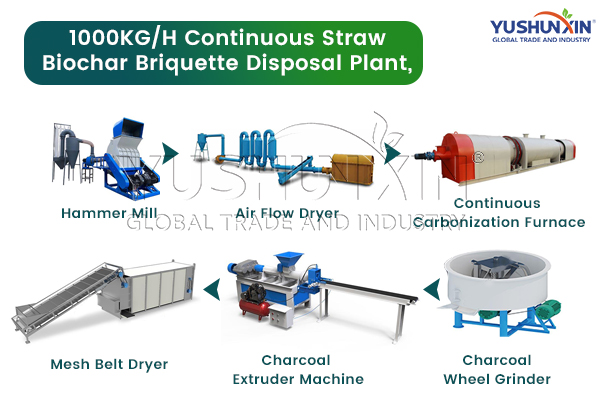
The dryer, the reactor, the discharge and cooling section, the screening unit and the packing line form the equipment block, and the foundation, the building and the yard form the civil block. A total cost estimate for a biomass carbonization plant also carries the transformer, the water supply, the gas cleaning and the fire protection as separate lines. You price each service with a local quotation, because a machine supplier rarely includes the utility work in its offer. The working capital for the first feedstock purchase closes the estimate.
How does the capacity choice change the total figure?
A larger line costs more in absolute terms and less for each tonne of capacity, because the building and the utilities serve a bigger output. A project cost structure for a carbonization plant therefore compares two capacities with the same feedstock supply, and that comparison shows the point at which the extra capacity stops paying. You keep the storage and the dryer in proportion to the reactor, because a bottleneck in one unit wastes the investment in the others. The estimate then reflects a balanced plant.
How does the briquette section fit the budget?
A briquette press turns the fine char into a denser product, and that section adds capital but also adds a product that the market accepts at a higher price. The briquette line cost within the plant budget appears as an optional block in the estimate, and that separation allows the owner to phase the investment. You test the case with and without the press, because the second scenario shows the value of the additional capital. The cost estimate then carries a defined scope for each phase.
Which contingencies belong in the estimate?
A contingency for the soil conditions, a second one for the permit requirements and a third one for the currency movement cover the three risks that appear in most biomass projects. You size each reserve from the local data instead of applying one global percentage, because a single figure hides the real exposure. The estimate also includes the commissioning cost and the training, since those items consume cash before the first sale. The board then approves a number that includes the uncertainty.
Conclusion for project developers and recycling companies
An estimate that separates the equipment, the civil works, the utilities, the permits and the working capital gives the investor a number that survives the first review. A carbonization plant cost advisors team that supplies the equipment list, the local cost data and the phased scope helps the developer present a defensible budget. The demand for char keeps the plant valuable, and a project that respects its estimate reaches production without a second capital call. If your team needs a reference for the line configuration and the cost scope, you can learn more about https://www.char-molder.com/product/continuous-carbonization-furnace/ before the next budget review.