A biochar production solution capacity defines how much agricultural residue a region can convert into char each year, and that figure anchors the collection network, the storage sites and the product handling of the local system. You, as a municipal planner or as a project developer, examine the biochar production solution capacity together with the residue survey of the area before the land is allocated. The infrastructure of the region then grows around a plant that the residue volume can feed.
Which local infrastructure does a biochar solution support?
The collection routes, the storage yard, the weighbridge and the product warehouse form the physical base of the plant, and each of them serves the surrounding farms as well. A local recycling infrastructure with a biochar solution also defines the collection points, because a residue that travels too far loses its value in transport. You reuse the existing transfer stations of the region, and that reuse reduces the public investment. The plant then connects to a network that already exists.
How does the capacity choice match the regional residue?
A region that produces rice husk, palm kernel shell or wood residue offers a continuous supply, and that continuity allows a larger line. A continuous furnace capacity for a regional programme study measures the seasonal pattern of that supply, because a plant sized for the harvest month runs short afterwards. You reserve a storage capacity that covers four weeks of operation, and that reserve protects the availability of the line. The capacity then follows the volume that the region can guarantee.
How does the briquette section fit the local market?
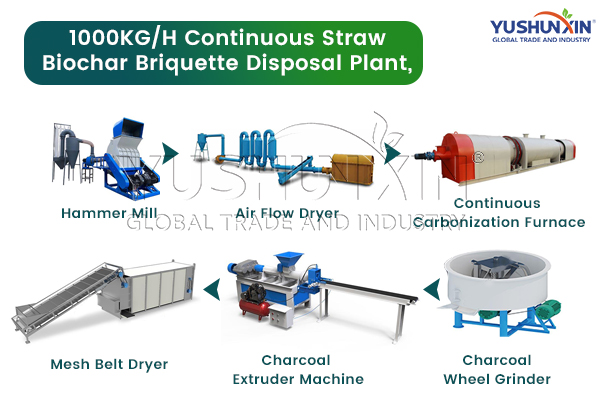
A briquette press turns the fine char into a denser product, and that product reaches the household cooking market as well as the industrial boiler market. An capacity planning for a biochar production solution review compares the demand of those two markets with the output of the press, because a product without a buyer becomes a stock. You test the binder and the press pressure with the local residue, since the same recipe behaves differently with a different fibre. The product then meets the specification of the chosen buyer.
How does the region measure the benefit?
The tonnage that the plant diverts from open burning, the jobs that it creates and the char that replaces firewood form the three indicators of the local benefit. You report those indicators to the municipal authority, because the support of the region depends on a visible result. The plant also records the residue that it purchases from the farmers, and that record shows the income that reaches the rural area. The annual report then supports the renewal of the operating agreement.
Conclusion for municipal planners and project developers
A biochar production solution supports the local infrastructure when its capacity matches the residue volume and when the collection network serves both the char process and the briquette product. A biochar infrastructure advisors team that supplies the residue survey, the capacity study and the collection plan helps the region build a system that lasts. The pressure on open burning and on landfill keeps the demand for that system rising, and a plant that fits the region serves it for many years. If your team needs a reference for the line configuration and the infrastructure scope, you can learn more about https://www.char-molder.com/product/charcoal-briquette-production-line/ before the next planning review.