Coconut shell hookah charcoal is popular in the shisha charcoal market because it has high density, long burning time, low ash content and stable heat. For investors, a complete coconut shell hookah charcoal production line can turn coconut shell waste into high-value cube charcoal, finger charcoal or customized shisha charcoal products.
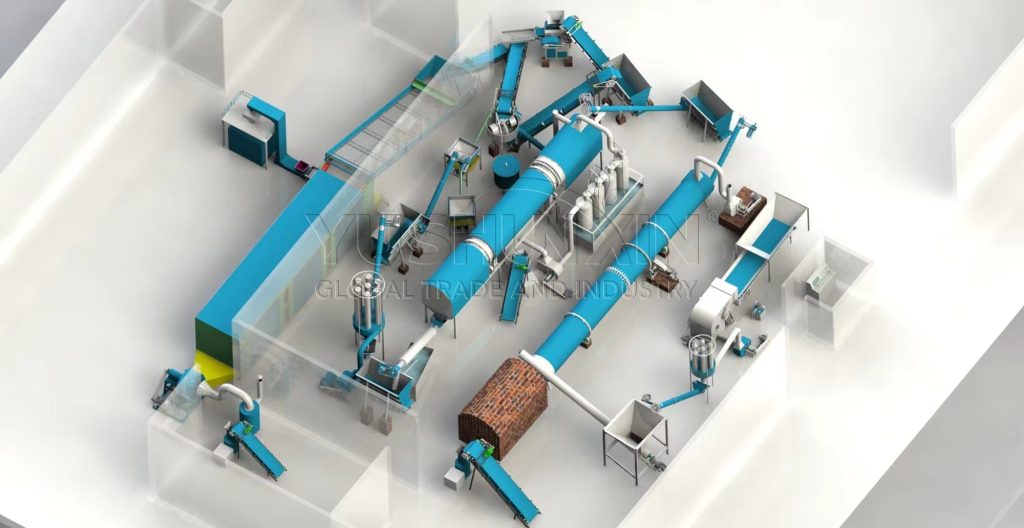
Why Choose Coconut Shell for Hookah Charcoal?
Coconut shell is a good raw material for hookah charcoal because it contains high fixed carbon after carbonization. Compared with ordinary biomass charcoal, coconut shell charcoal is harder and cleaner. It can burn longer and produce less smoke when the production process is controlled well. Therefore, it is suitable for hookah charcoal factories, biomass charcoal plants and charcoal traders who want stable product quality.
Main Process of Coconut Shell Hookah Charcoal Production
The production process usually includes raw material preparation, carbonization, crushing, mixing, forming, drying and packing.
First, coconut shells are cleaned and dried to reduce moisture. Then they enter the carbonization furnace. During carbonization, the shells turn into charcoal under high temperature and limited oxygen. After cooling, the coconut shell charcoal is crushed into fine powder.
Next, the charcoal powder is mixed with binder and water according to the required formula. Good mixing helps improve charcoal strength and burning stability. After that, the mixed material goes into the hookah charcoal forming machine. The machine can press the material into cube, round or customized shapes. Finally, the formed charcoal needs drying to reduce moisture before packaging.
What Equipment Is Needed?
A complete coconut shell hookah charcoal production line usually includes a carbonization furnace, charcoal crusher, powder mixer, hookah charcoal briquette machine, dryer, conveyor and packing machine. If the customer needs higher automation, the line can also add automatic feeding, cooling, screening and dust collection systems.
The equipment configuration should match the target capacity, raw material moisture, charcoal shape, local fuel condition and labor cost. For small factories, a semi-automatic line may be enough. For commercial production, an automatic line can reduce labor and improve output stability.
How Much Does a Hookah Charcoal Production Line Cost?
The cost depends on capacity, automation level, machine material, drying method and environmental requirements. A small production line has lower investment and suits new starters. A larger automatic line costs more, but it can support stable bulk orders and lower unit labor cost.
Before buying machines, investors should confirm daily output, charcoal size, market standard, factory space and local electricity condition. A reliable supplier can provide process design, equipment selection, layout guidance, installation support and operator training.
Conclusion
A coconut shell hookah charcoal production line is not only a charcoal making machine project. It is a complete production system. With the right process and equipment, coconut shell waste can become high-quality hookah charcoal with better market value. Visiting: https://www.ysxcharpro.com/product/hookah-charcoal-production-line/
Leave a Reply