Choosing the right continuous carbonization machine starts with a clear understanding of capacity. “TPD” (tons per day) is more than a number on a specification sheet—it determines your feedstock logistics, energy balance, labor needs, and the scale of downstream processing such as briquetting, grinding, cooling, and packaging. Whether you are carbonizing biomass to make biochar for soil improvement or producing charcoal for fuel applications, capacity selection should match both your raw material supply and your target market.
What “1 TPD to 50 TPD” Really Means
A 1 TPD machine typically processes about one ton of dry biomass within 24 hours under stable operation. In practice, real throughput depends heavily on moisture content, particle size, and feedstock type. For example, sawdust or rice husk can behave very differently from coconut shells or wood chips. Higher moisture reduces effective capacity because more heat is consumed evaporating water before carbonization can proceed. This is why suppliers often specify “design capacity” based on a recommended moisture range (commonly below 15–20%).
Small Scale: 1–5 TPD for Pilot and Local Supply
Machines in the 1–5 TPD range are ideal for pilot projects, farms, and small factories that want continuous operation without the complexity of a large industrial line. They typically require simpler feeding systems, smaller reactors, and modest cooling and dust collection equipment. This size is often chosen when feedstock is seasonal or distributed (such as orchard prunings or small sawmills), and when the finished product is sold locally—biochar to nearby growers, or charcoal to small traders.
Mid Scale: 10–20 TPD for Commercial Operations
At 10–20 TPD, the project moves into full commercial territory. Feedstock preparation becomes a major focus: screening, drying, and consistent sizing can be the difference between stable carbonization and frequent downtime. These systems often integrate heat recovery so the combustible pyrolysis gas can support reactor heating, lowering fuel costs. Mid-scale plants are also where automation begins to pay off through steady feeding, temperature control, and continuous discharge to cooling units, improving product consistency and reducing labor.
Large Scale: 30–50 TPD for Industrial Production
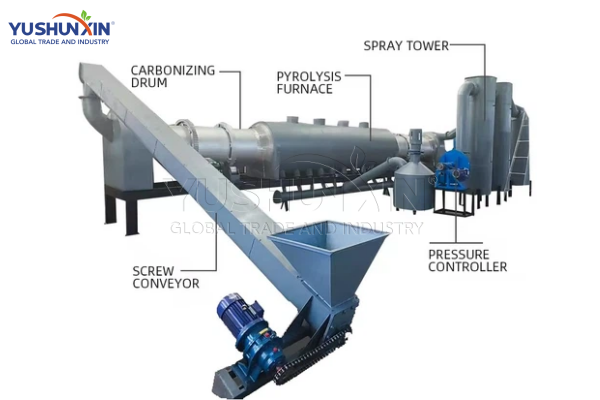
A 30–50 TPD continuous carbonization line is built for long-term, high-volume contracts—industrial fuel, metallurgical support charcoal, or large biochar supply chains. At this scale, the supporting infrastructure is as important as the reactor: robust conveyors, multiple dryers, advanced gas cleaning, and strict environmental controls for emissions and dust. Storage and logistics also expand—both for incoming biomass and outgoing finished carbon, which may require bagging lines, bulk loading, and quality testing. If you want to know the design of continuous carbonization machine, please contact us.
How to Choose the Right Capacity
Start with three numbers: guaranteed daily feedstock availability, average moisture content, and your required daily finished output. Then plan for growth: many operators select a system slightly above current needs to avoid bottlenecks later. A well-matched capacity reduces operating stress, improves yield, and ensures your continuous carbonization machine delivers predictable performance from day one. Visiting: https://www.char-molder.com/product/continuous-carbonization-furnace/
Leave a Reply