Introduction to Continuous Carbonization Machines
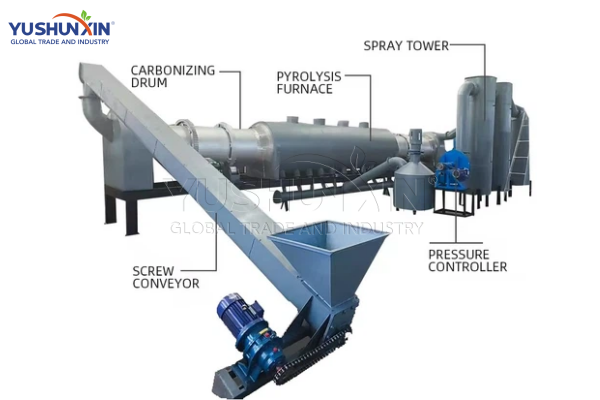
Continuous carbonization machines are advanced technological solutions designed to convert organic waste into biochar, a valuable product used in agriculture, energy production, and various industrial applications. These machines operate continuously, offering an efficient way to process large amounts of biomass or organic waste while reducing environmental impact. Understanding how much profit a continuous carbonization machine can make per day involves analyzing input costs, operational efficiency, product yield, and market demand.
Operating Costs and Inputs
Raw Material Acquisition
The primary input for a carbonization machine is organic waste, such as agricultural residues, forestry waste, or even municipal solid waste. The cost of acquiring these raw materials can vary significantly based on local availability and logistics. In some cases, companies can even be paid to take waste material, turning this cost into a source of revenue.
Energy and Labor
Operating a continuous carbonization machine requires energy and labor. Energy costs will depend on the machine’s efficiency and local energy prices, while labor costs can vary based on the complexity of the operation and local wage standards. Efficient machines and skilled operators can significantly reduce these operational expenses.
Output and Revenue Streams
Biochar Production
The primary product of the carbonization process is biochar, a form of carbon-rich charcoal. The daily output of biochar depends on the machine’s capacity, typically measured in tons per day. The market price for biochar can range widely based on its quality and the intended use, significantly impacting potential revenue.
By-products and Additional Value
In addition to biochar, continuous carbonization machines may produce by-products like wood vinegar and tar, which can be sold separately, enhancing revenue streams. These by-products have applications in agriculture and chemical industries, offering additional profit avenues.
Market Demand and Pricing
Biochar Market Trends
The demand for biochar is growing due to its use in improving soil health, sequestering carbon, and serving as a renewable energy source. Market trends indicate increasing prices, driven by environmental regulations and the push for sustainable agriculture practices. Understanding and capitalizing on these trends can boost profitability.
Supply Chain and Distribution
Efficient supply chain management is crucial for maximizing profits. Establishing distribution channels to reach agricultural, industrial, and energy sectors is essential. Building partnerships with these industries can ensure a stable demand and favorable pricing for biochar and its by-products.
Calculating Daily Profit
Estimating the daily profit involves subtracting total operating costs from the total revenue generated by selling biochar and by-products. For example, if a machine produces 10 tons of biochar per day, and the market price is $500 per ton, the revenue would be $5,000. Subtracting operating costs, say $2,000 for materials, energy, and labor, results in a daily profit of $3,000.
Conclusion: Maximizing Profitability
Continuous carbonization machines provide a lucrative opportunity to transform waste into valuable products. By optimizing operational efficiency, reducing input costs, and leveraging market demand for biochar and its by-products, businesses can achieve substantial daily profits. As environmental concerns drive the demand for sustainable solutions, the profitability of these machines is likely to increase, making them a viable investment in the green economy. Visiting: https://www.char-molder.com/product/continuous-carbonization-furnace/
Leave a Reply