Introduction
Charcoal briquettes are a popular form of fuel used for grilling, heating, and various industrial applications. They are made from biomass materials like wood, sawdust, or agricultural waste, which are compressed and then carbonized. The production of charcoal briquettes involves several key pieces of equipment that work in tandem to turn raw materials into uniform, efficient, and eco-friendly fuel sources. In this passage, we will explore the essential equipment needed to produce charcoal briquettes.
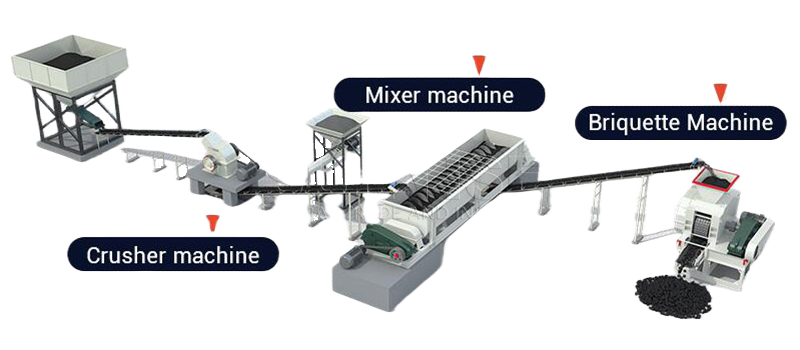
Crushing Machine
The first step in the production of charcoal briquettes is preparing the raw materials. Biomass materials such as wood, sawdust, or coconut shells need to be reduced to a consistent size to ensure efficient processing. A crushing machine, also known as a crusher or grinder, is used to break down the raw materials into smaller, manageable pieces. This equipment is crucial as it increases the surface area of the biomass, facilitating better carbonization and binding in subsequent stages.
Drying Machine
Once the raw materials are crushed, they must be dried to achieve the optimal moisture content for briquetting. A drying machine, often a rotary dryer or a flash dryer, is employed to remove excess moisture from the biomass. Proper drying is essential because high moisture content can affect the quality and combustion efficiency of the final briquettes. This step ensures that the materials are in the best condition for the briquetting process.
Briquette Press Machine
The heart of the charcoal briquette production process is the briquette press machine. This equipment compresses the prepared biomass into a compact form, typically using high pressure and sometimes heat. There are different types of briquette press machines, including piston presses, screw presses, and roller presses, each with its own advantages. The choice of machine depends on the desired shape and size of the briquettes, as well as the specific requirements of the production process. This stage is critical, as it determines the density, durability, and burn quality of the charcoal briquettes.
Carbonization Furnace
After the biomass is formed into briquettes, the next step is carbonization, which involves heating the briquettes in the absence of oxygen to convert them into charcoal. A carbonization furnace, also known as a charcoal kiln or retort, is used for this purpose. The furnace can be a traditional brick kiln or a modern metal retort, designed to efficiently control temperature and airflow. Proper carbonization ensures that the briquettes achieve the desired characteristics, such as high carbon content and good combustion properties.
Packing Machine
Once the charcoal briquettes have cooled, they are ready for packaging. A packing machine is used to bag the briquettes in uniform quantities, making them convenient for transport and sale. Proper packaging not only ensures the briquettes remain dry and ready for use but also enhances their marketability by providing a professional appearance.
Conclusion
The production of charcoal briquettes involves a series of steps, each requiring specialized equipment to ensure the final product is of high quality and efficiency. From crushing and drying the raw materials to pressing and carbonizing the briquettes, each piece of equipment plays a vital role in the process. With the right setup, manufacturers can produce charcoal briquettes that are environmentally friendly and meet the growing demand for sustainable fuel alternatives. Visiting: https://www.char-molder.com/product/charcoal-briquette-production-line/
Leave a Reply