The production of coconut shell charcoal is a burgeoning industry, driven by the demand for sustainable and eco-friendly fuel alternatives. Coconut shells, often considered waste, are transformed into high-quality charcoal through a series of processes. This charcoal is not only utilized for cooking and heating but also finds applications in industries like metallurgy and water purification. To ensure the efficient production of coconut shell charcoal, selecting the right machinery is paramount. Below, we delve into the essential equipment and considerations for setting up an effective coconut shell charcoal production line.
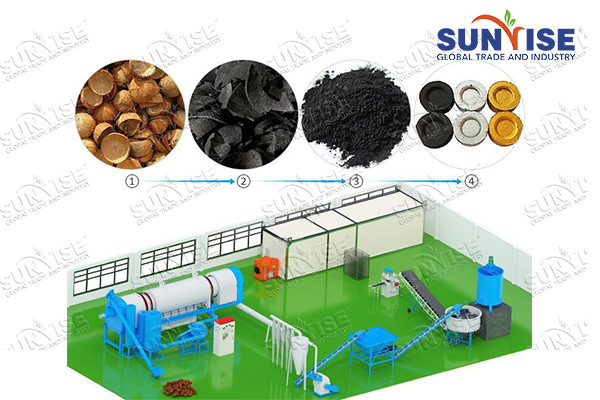
Pre-Processing Equipment
Coconut Shell Crushing Machines
Before the carbonization process can commence, coconut shells need to be reduced to a manageable size. Crushing machines specifically designed for coconut shells efficiently break down the hard exterior into smaller, more uniform pieces. This step is crucial as it increases the surface area of the shells, enhancing the efficiency of subsequent processes. These crushers typically feature robust construction with wear-resistant blades to ensure durability and consistent performance.
Drying Systems
Coconut shells contain residual moisture that must be removed to facilitate effective carbonization. Drying systems, such as rotary dryers or conveyor dryers, play an essential role in reducing moisture content. By regulating temperature and airflow, these systems ensure that the shells are adequately dried to the desired level, promoting uniform carbonization and improving the quality of the final charcoal product.
Carbonization Equipment
Charcoal Kilns
The heart of coconut shell charcoal production is the carbonization process, where shells are converted into charcoal through thermal decomposition. Charcoal kilns, whether traditional or modern, are integral to this process. Traditional kilns, while cost-effective, may lack efficiency and environmental controls. Modern kilns, such as continuous carbonization furnaces or retort kilns, offer enhanced control over temperature and residence time, leading to higher yields and better quality charcoal. These advanced kilns are also designed to capture and reuse byproducts like wood vinegar and tar, further enhancing sustainability.
Temperature and Emission Control Systems
Effective control of temperature and emissions during carbonization is critical to producing high-quality charcoal. Temperature control systems ensure that the carbonization process occurs at optimal temperatures, maximizing yield and minimizing energy consumption. Emission control systems, such as scrubbers and filters, help in managing and reducing the release of pollutants, thereby ensuring compliance with environmental regulations.
Post-Processing and Auxiliary Equipment
Charcoal Cooling and Screening Units
Once carbonization is complete, the charcoal must be cooled and screened to achieve the desired size and purity. Cooling units, such as water-cooled conveyors, rapidly reduce the temperature of the charcoal, preventing spontaneous combustion. Screening machines then classify charcoal into different grades, removing dust and impurities to improve product quality.
Charcoal Briquetting Machines
For applications requiring uniform shape and size, charcoal briquetting machines are employed. These machines compress powdered charcoal into briquettes, which are easier to handle, store, and transport. The choice of briquetting equipment depends on factors like production capacity and desired briquette shape.
Conclusion
The production of coconut shell charcoal is a viable and sustainable business opportunity, provided the right machinery is utilized. From pre-processing equipment to carbonization and post-processing systems, each component is essential for efficient and environmentally responsible production. By investing in advanced technology and reliable machinery, producers can optimize their operations, enhance product quality, and contribute to a more sustainable future. Visiting: https://www.char-molder.com/product/biochar-production-equipment/
Leave a Reply