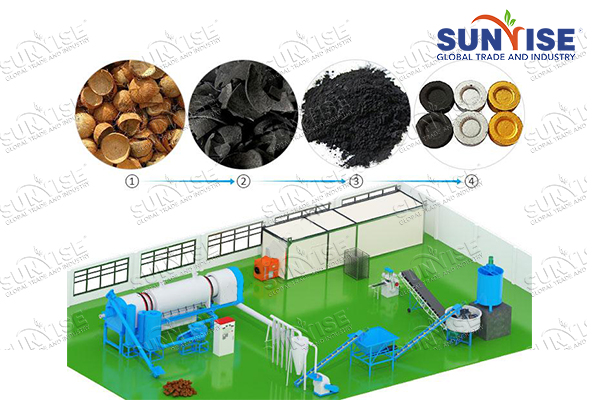
The increasing demand for sustainable and renewable energy sources has led to a growing interest in biochar briquettes, particularly those made from agricultural waste like coconut shells. These briquettes offer an eco-friendly alternative to traditional fuels, providing a way to utilize waste products effectively. Here’s a comprehensive guide on how to use coconut shells to produce biochar briquettes.
Understanding Biochar and Its Benefits
What is Biochar?
Biochar is a form of charcoal produced by heating organic material in the absence of oxygen, a process known as pyrolysis. When used as a fuel, biochar briquettes provide consistent energy output and produce less smoke compared to conventional wood or coal.
Environmental and Economic Advantages
Producing biochar from coconut shells not only helps in managing agricultural waste but also reduces greenhouse gas emissions. Furthermore, biochar enhances soil fertility when used as a soil amendment, aiding in carbon sequestration and improving agricultural productivity.
Preparing Coconut Shells for Biochar Production
Collection and Cleaning
The first step involves collecting coconut shells, which are often discarded as waste in coconut-processing industries. Ensure that the shells are dry and free from contaminants. Washing the shells and allowing them to dry completely in the sun can help achieve the desired cleanliness and moisture level.
Crushing and Sizing
Once cleaned, the coconut shells need to be crushed into smaller pieces. This increases the surface area and ensures uniform heating during the pyrolysis process. Machines like shredders or manual crushers can be used for this purpose, depending on the scale of production.
The Pyrolysis Process
Setting Up the Pyrolysis Unit
A pyrolysis kiln or reactor is essential for converting coconut shells into biochar. There are various designs available, ranging from simple earth pits to advanced industrial kilns. The choice depends on resource availability and production scale.
Conducting Pyrolysis
Load the crushed coconut shells into the pyrolysis unit and heat them in an oxygen-limited environment. The temperature and duration of the process can vary, but generally, it ranges between 300°C and 600°C for several hours. This controlled heating decomposes the organic material, resulting in biochar.
Forming Biochar Briquettes
Mixing and Binding
Once the pyrolyzed coconut shells are cooled, they need to be ground into a fine powder. This powder can then be mixed with a binding agent, such as starch or clay, to help form cohesive briquettes. The ratio and type of binder used can affect the briquette’s strength and combustion properties.
Molding and Drying
The mixture is then pressed into molds to form uniform briquettes. Manual or hydraulic briquette presses can be used based on production needs. After molding, the briquettes should be dried thoroughly to remove any excess moisture, ensuring better combustion quality when used.
Quality Control and Usage
Testing and Optimization
Before large-scale production, it’s vital to test the briquettes for properties such as burn time, heat output, and smoke emission. Adjustments in binder content or pyrolysis conditions may be required to optimize performance.
Applications and Benefits
Biochar briquettes from coconut shells can be used for domestic cooking, industrial heating, and even electricity generation in biomass power plants. They offer a sustainable solution, turning waste into a valuable resource, and contribute significantly to reducing reliance on fossil fuels.
By understanding and implementing these processes, individuals and communities can harness the potential of coconut shells to produce efficient and eco-friendly biochar briquettes, promoting sustainability and waste reduction. Visiting: https://www.char-molder.com/product/how-to-make-coconut-charcoal-briquettes/
Leave a Reply