Introduction
Sawdust charcoal briquettes are a popular and eco-friendly alternative to traditional charcoal, providing a sustainable solution to utilizing sawmill waste. These briquettes are made by compressing sawdust and other biomass materials, transforming them into a convenient and efficient fuel source. The process of making sawdust charcoal briquettes involves several stages, each contributing to the quality and efficiency of the final product. This article outlines the step-by-step process, highlighting the key stages involved in the production of sawdust charcoal briquettes.
Collection and Preparation of Raw Materials
The first step in producing sawdust charcoal briquettes is the collection and preparation of raw materials. Sawdust, often considered a waste product in the timber industry, is the primary material used. Other biomass materials such as wood chips, agricultural residues, and coconut shells can also be incorporated. The collected materials are sorted to remove any impurities like stones or metal fragments, ensuring a clean input for the briquetting process.
Once sorted, the raw materials are dried to reduce moisture content. This is a crucial step, as excess moisture can affect the briquetting process and the quality of the final briquettes. Typically, the moisture content is reduced to around 8-12% using natural sun drying or mechanical dryers.
Carbonization
The dried biomass undergoes carbonization to convert it into charcoal. This process involves heating the biomass in a controlled, low-oxygen environment, which prevents it from burning completely and instead converts it into charcoal. Traditional methods use earth kilns or brick kilns, while modern methods may utilize more efficient metal kilns. The carbonization process results in the production of biochar, which is the basic component of charcoal briquettes.
Grinding and Mixing
After carbonization, the resulting charcoal is ground into a fine powder. A grinding machine is used to ensure the charcoal is consistently fine, which is essential for producing uniform briquettes. The ground charcoal is then mixed with a binding agent, such as starch or clay, which helps hold the briquettes together. Sometimes, water is added to the mixture to facilitate better cohesion and prevent the briquettes from crumbling.
Briquetting
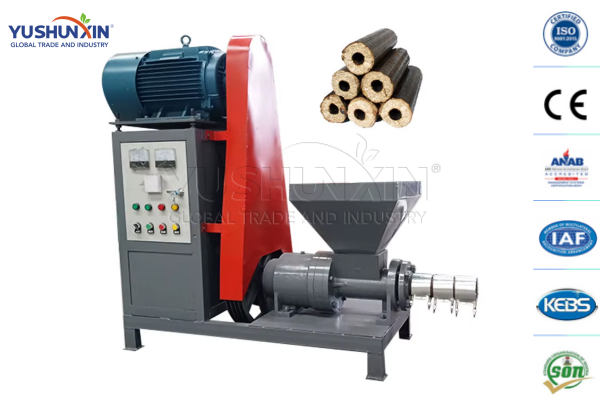
The mixed material is then fed into a briquetting machine, which compresses it into the desired shape and size. Briquetting machines apply high pressure to form solid briquettes, which can be produced in various shapes, such as cylindrical, square, or hexagonal. The compression process is vital, as it determines the density and burning efficiency of the briquettes.
Drying and Packaging
The freshly formed briquettes are then dried to further reduce moisture content, improving their combustion efficiency and storage life. Drying can be done using natural sunlight or industrial drying ovens. Once sufficiently dried, the briquettes are packaged for distribution. Packaging is done carefully to protect the briquettes from moisture and physical damage during transport and storage.
Conclusion
The process of making sawdust charcoal briquettes is an efficient way to utilize waste materials from the timber and agricultural industries. By converting sawdust and other biomass into a valuable fuel source, this process supports environmental sustainability and provides a reliable energy alternative. From raw material preparation to carbonization, grinding, briquetting, and drying, each stage is essential in producing high-quality charcoal briquettes that offer both economic and ecological benefits. Visiting: https://www.char-molder.com/2024/06/15/how-to-make-charcoal-briquettes-from-sawdust-in-kenya/
Leave a Reply