The quest for sustainable energy solutions has led to the exploration of various biomass resources, among which straw is emerging as a significant contender. Straw biochar briquettes offer a promising alternative for renewable energy, providing a carbon-neutral fuel source while enhancing soil health when used as a soil amendment. The production of these briquettes involves several key steps, each requiring specialized machinery. This passage delves into the machines suitable for making straw biochar briquettes, highlighting their roles and contributions to sustainable energy production.
The Benefits of Straw Biochar Briquettes
Environmental and Agricultural Advantages
Straw biochar briquettes are not only a sustainable energy source but also contribute to soil enhancement. When used as a biochar, these briquettes improve soil fertility, increase water retention, and reduce nutrient leaching. Additionally, using agricultural waste such as straw for briquette production helps mitigate waste disposal issues and reduces greenhouse gas emissions by sequestering carbon.
Key Machinery in Straw Biochar Briquette Production
Straw Shredders and Grinders
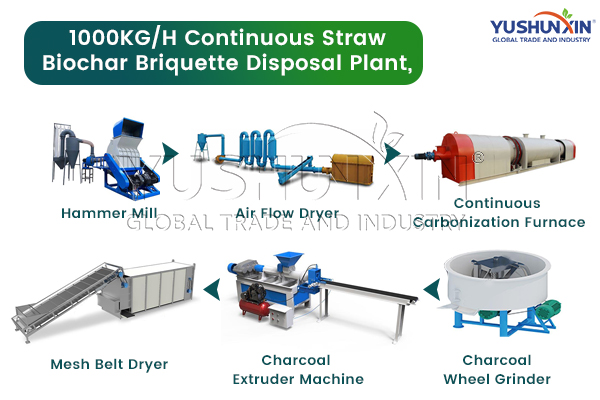
The production process begins with size reduction. Straw shredders and grinders are essential for breaking down straw into smaller, more manageable pieces. This step is crucial for ensuring uniformity and efficiency in the subsequent processing stages. Advanced shredders and grinders are designed to handle large volumes, providing a consistent output that enhances the quality of the final briquettes.
Pyrolysis Kilns
Pyrolysis is the process of converting biomass into biochar by heating it in the absence of oxygen. Pyrolysis kilns are specialized machines that maintain precise temperatures and conditions to ensure optimal conversion. These kilns play a pivotal role in determining the quality and yield of biochar, making them indispensable in the production of high-quality straw biochar briquettes.
Briquetting Machines
Once the straw is converted into biochar, it is ready for briquetting. Briquetting machines compress the biochar into uniform, dense briquettes. These machines come in various models, including hydraulic, screw, and piston press machines, each offering different benefits in terms of density and durability of the briquettes. Selecting the appropriate briquetting machine is crucial for meeting specific energy requirements and application needs.
Drying Systems
Drying systems are important for reducing the moisture content of the straw and the final briquettes. Low moisture content is essential for high combustion efficiency and storage stability. Advanced drying systems use energy-efficient methods to ensure the moisture level remains optimal throughout the production process.
Advantages of Utilizing Specialized Machinery
Enhanced Efficiency and Quality
The use of specialized machinery ensures high efficiency in the production process and enhances the quality of the final product. This results in briquettes with consistent energy output and structural integrity.
Economic and Environmental Sustainability
Efficient machinery reduces operational costs and minimizes environmental impact, making the production of straw biochar briquettes economically viable and environmentally sustainable.
Supporting Renewable Energy Goals
By converting agricultural waste into valuable energy resources, straw biochar briquettes contribute to broader renewable energy goals, promoting energy independence and sustainability.
Conclusion
The production of straw biochar briquettes relies heavily on the use of specialized machinery designed to optimize each stage of the process. From shredding to briquetting, each machine plays a crucial role in ensuring the production of high-quality, sustainable fuel. As technology advances, these machines will continue to improve in efficiency and effectiveness, further cementing the role of straw biochar briquettes in the renewable energy landscape. Visiting: https://www.char-molder.com/product/straw-charcoal-briquette-plant/
Leave a Reply