Introduction to Sawdust Charcoal Briquettes
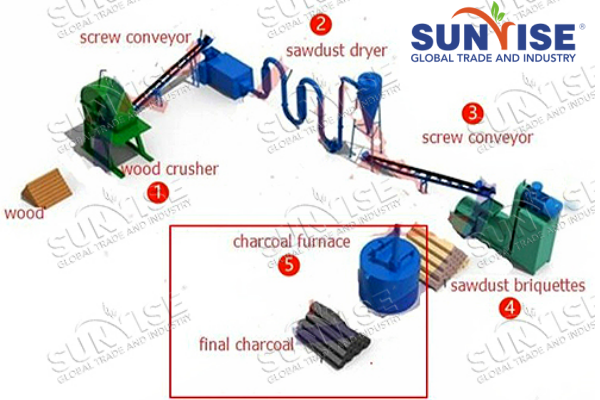
Sawdust charcoal briquettes are a sustainable and efficient form of renewable energy derived from wood waste. This process not only offers an eco-friendly solution to managing sawdust but also provides an alternative to traditional charcoal and fossil fuels. This passage explores the comprehensive process of making sawdust charcoal briquettes, highlighting the steps involved from raw material preparation to final product packaging.
Collection and Preparation of Raw Materials
Gathering Sawdust
The process begins with the collection of sawdust, a byproduct of woodworking and sawmilling industries. This raw material is abundant and often disposed of as waste, making it an ideal candidate for recycling into briquettes. Ensuring a consistent supply of quality sawdust is crucial to the efficiency and economic viability of the production process.
Drying the Sawdust
Before any processing can commence, the sawdust must be dried to reduce its moisture content to below 10%. This is essential because excessive moisture can hinder the briquetting process and affect the quality of the final product. Drying can be achieved through natural sun drying or using industrial dryers, which expedite the process.
Sawdust Briquetting Process
Mixing and Binder Addition
Once dried, the sawdust is mixed with a binding agent to enhance its cohesiveness. Common binders include starch, clay, or organic materials, which help the sawdust particles stick together during briquetting. The binder is typically mixed with water to form a paste, which is then evenly combined with the dry sawdust.
Compaction and Briquetting
The mixture is fed into a briquette press, where it is compacted under high pressure to form briquettes. The pressure and temperature in the press cause the lignin in the wood to melt and bind the sawdust particles together, eliminating the need for synthetic binders. The compacted briquettes are then extruded in specific shapes and sizes depending on the design of the press mold.
Carbonization and Cooling
Carbonization Process
The formed briquettes are transferred to a carbonization kiln, where they are subjected to high temperatures in an oxygen-limited environment. This process, known as pyrolysis, converts the briquettes into charcoal by driving off volatile compounds and leaving behind carbon-rich material. The carbonization temperature typically ranges from 400°C to 800°C and can take several hours.
Cooling and Stabilization
After carbonization, the hot charcoal briquettes are carefully cooled to prevent spontaneous combustion. This is usually done in a controlled environment to avoid re-oxidation. Once cooled, the charcoal briquettes are stabilized, ensuring they maintain their shape and structure.
Packaging and Distribution
Quality Inspection
Before packaging, the briquettes undergo a quality inspection to ensure they meet the required standards for size, shape, and carbon content. This step is crucial for maintaining product consistency and customer satisfaction.
Packaging and Marketing
The final briquettes are then packaged in bags or boxes, ready for distribution. Packaging is designed to protect the briquettes from moisture and breakage during transport. Effective marketing strategies are employed to promote the eco-friendly benefits of sawdust charcoal briquettes, targeting both domestic and industrial users.
Conclusion: Sustainable Energy Solution
Sawdust charcoal briquettes offer a sustainable energy solution, turning wood waste into a valuable product that reduces reliance on non-renewable resources. This process not only helps manage sawdust waste but also contributes to energy conservation and carbon emission reduction. As the demand for green energy alternatives rises, sawdust charcoal briquettes represent a forward-thinking approach to sustainable living and resource management. Visiting:
Leave a Reply